How to thaw frozen pipes in Cleburne winter
Frozen pipes in Cleburne TX are common once overnight lows drop into the 20s. Here is how to thaw them safely, spot a burst, and keep it from happening again.
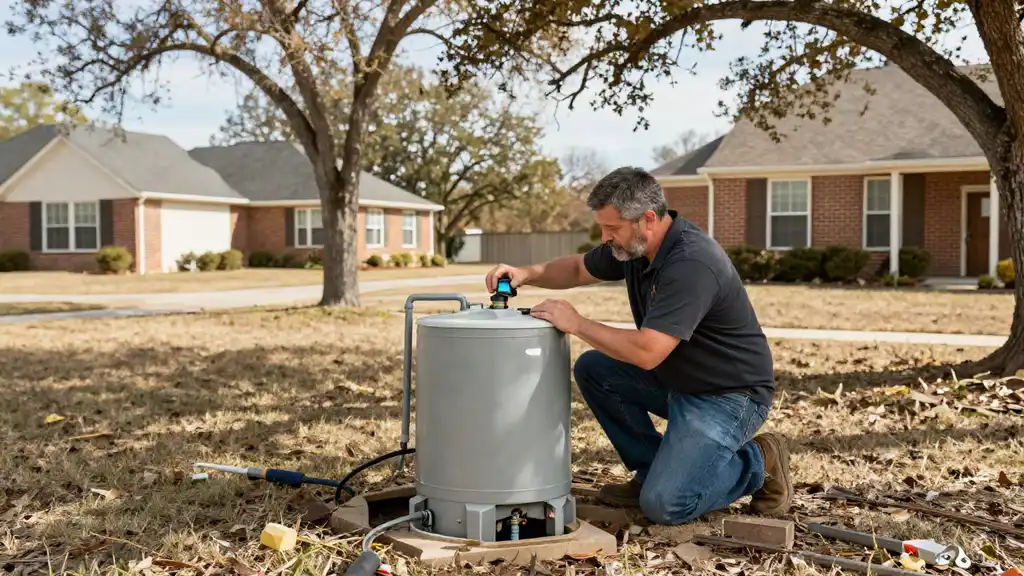
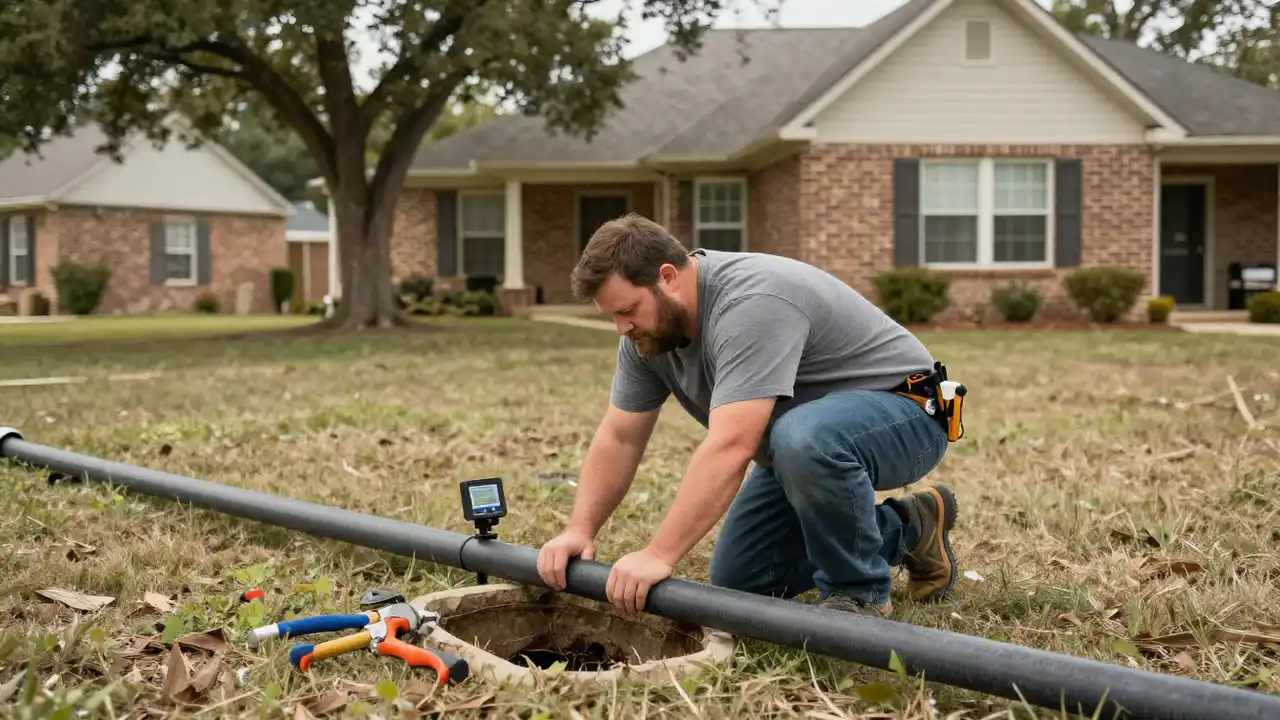
Thaw a frozen pipe by warming it slowly with a hair dryer, heat lamp, or towels soaked in hot water, starting at the faucet end and working back toward the frozen section. Never use an open flame, and never pour boiling water directly on a pipe. In Cleburne, most freeze-ups happen on exterior hose bibs, pipes in the attic, and uninsulated lines in a pier-and-beam crawlspace, and they usually thaw within 30 to 60 minutes of steady, gentle heat.
What follows is the full playbook: how to find the frozen section, how to tell a freeze from a burst, what to do if water starts spraying, and how to keep it from happening again next January.
How to thaw frozen pipes in Cleburne winter: the short answer
Thaw frozen pipes Cleburne TX homeowners deal with by applying low, steady heat to the frozen section while a faucet stays open downstream so melting water has somewhere to go. The goal is to raise the pipe temperature above 32°F without shocking the metal or the joint.
Thawing a frozen pipe is a controlled warm-up, not a rescue. If you rush it with a torch or a heat gun on high, you can crack a copper joint or melt a PEX fitting. If you warm it too slowly and leave it, you risk the ice expanding into a full burst. The window where a frozen pipe is still just frozen is the window where you want to work.
Most Cleburne homes sit on either a slab or a pier-and-beam foundation, and both create freeze risks. Slab homes freeze at exterior hose bibs and any pipe running through an unheated garage wall. Pier-and-beam homes freeze underneath, where cold air moves freely through the crawlspace vents. Our team handles both layouts regularly through plumbing Cleburne TX calls every winter.
Why Cleburne pipes freeze so fast
Cleburne pipes freeze fast because North Texas winters swing hard - a 75°F afternoon can drop to 18°F by 2 a.m., and plumbing that was fine at dinner is solid ice before sunrise. That 50-plus-degree overnight swing is the real culprit.
Three local conditions make it worse:
- Wind. Open pasture and lake-effect wind off Lake Pat Cleburne strips heat off exterior walls and crawlspace pipes far faster than still air.
- Foundation type. Pier-and-beam homes have vented crawlspaces that pull in cold air all night. Slab homes push the freeze point to hose bibs, attic runs, and garage walls.
- Older housing stock. A lot of Cleburne homes were built before modern insulation codes, so exterior wall cavities and attic runs are thinner than what you would see in a new build.
Pipes freeze when the water inside sits below 32°F long enough to form ice. The ice itself is not the disaster - the pressure between the ice plug and a closed faucet is. That trapped pressure is what splits pipe walls, and it is why a pipe often looks fine until the thaw starts and water finds the crack.
How to tell a frozen pipe from a burst pipe
A frozen pipe gives you no water or a trickle at one fixture; a burst pipe gives you water where it should not be - a wet ceiling, a puddle at the base of a wall, or a hiss behind drywall. The two problems need different responses.
Run this check before you start heating anything:
- Open the affected faucet. No flow or a weak dribble points to a freeze. Full flow with a leak nearby points to a burst.
- Walk the house for wet spots. Check ceilings under bathrooms, the base of exterior walls, and the floor around the water heater.
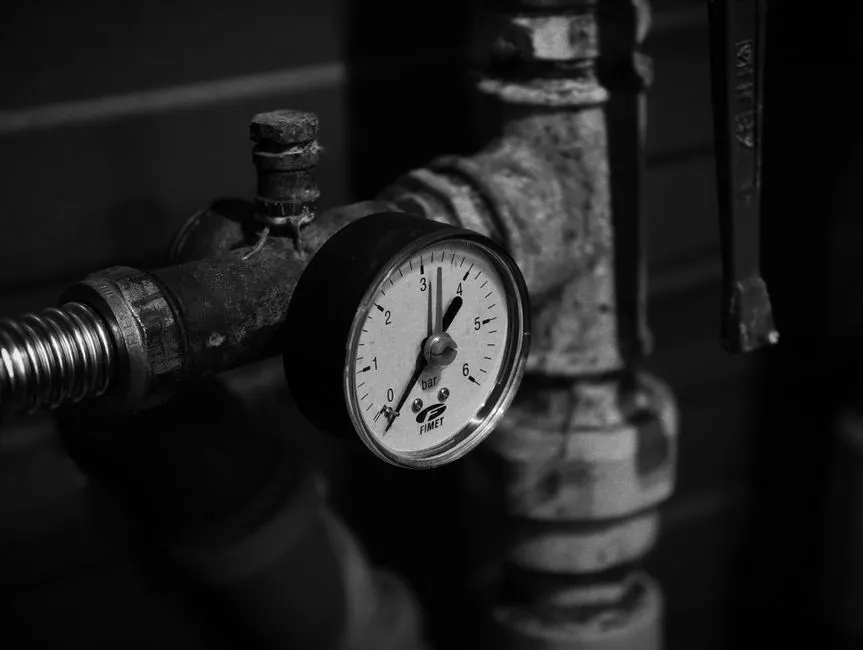
- Look at your water meter. If the leak indicator is spinning with every fixture off, you have a live leak, not a freeze.
- Smell for musty air near walls. That is often a slow leak that has been running behind drywall for a while.
If you find active water, shut off the main at the street or at the interior shutoff and call for help. A burst pipe can dump 4 to 8 gallons a minute into a home, and that is how a $200 repair turns into a $6,000 drywall and flooring job. Our emergency plumber Cleburne TX line runs around the clock for exactly this situation.
How to thaw frozen pipes in Cleburne step by step
Thawing a frozen pipe safely takes 20 to 60 minutes per section. Here is the order we use on service calls.
1. Find the frozen section
Start at the fixture with no water and trace the line backward. Common freeze points in Cleburne homes are the exterior hose bib, the pipe where it enters the exterior wall, and any run through an attic or crawlspace. Touch the pipe - the cold spot is usually the frozen spot.
2. Open the faucet
Open the affected faucet, both hot and cold if it is a single-handle fixture. This gives melting water a path out and drops the pressure trapped between the ice plug and the valve. Leave it open the whole time you are thawing.
3. Apply gentle heat
Work from the faucet end back toward the frozen section. A hair dryer on low, a heat lamp, or towels wrapped in hot water all work. Keep the heat source moving - do not park it on one spot. A pipe surface temperature of 120°F to 140°F is plenty; you are warming, not cooking.
4. Watch for the first trickle
When you hear water start to move, keep heating for another few minutes. Partial thaws refreeze fast in Cleburne overnight lows, and a half-thawed line is more likely to split than one you left alone.
5. Check for leaks after the thaw
Once flow is normal, dry the pipe and watch it for 10 minutes. Any drip, weep, or damp spot means the freeze already did damage. That is a pipe repair Cleburne TX job, not a wait-and-see.
What not to do when your pipes freeze
The fastest way to turn a frozen pipe into a flooded house is to heat it wrong. Skip every one of these:
- No open flame. A propane torch or lighter can ignite insulation, melt PEX, and crack copper at the joint.
- No boiling water on the pipe. Thermal shock splits metal and softens PVC.
- No space heater left unattended. A heater parked next to a wall cavity is a fire risk, not a fix.
- No hammering or prying. Hitting a frozen pipe to break the ice is how you crack it.
- No pouring antifreeze into drains. It does nothing for the pipe and it is bad for your septic or the city system.
If you cannot reach the frozen section - a lot of attic and crawlspace runs in Cleburne are tight - do not force it. Call us and we will get to it.
How to prevent frozen pipes Cleburne TX homeowners deal with
Prevent frozen pipes Cleburne TX by insulating every pipe that runs through an unheated space, sealing the crawlspace vents on hard-freeze nights, and dripping one faucet on the coldest wall when the forecast drops below 20°F.
Here is what we recommend to homeowners before the first hard freeze of the season:
- Wrap exterior hose bibs with a foam cover and shut off the interior valve feeding them.
- Insulate attic and crawlspace runs with foam pipe sleeves - a $20 fix that prevents a $500 repair.
- Seal gaps around pipes where they pass through exterior walls with expanding foam or caulk.
- Disconnect garden hoses. A hose left on a bib traps water in the valve body.
- Know where your main shutoff is. In an emergency, that 30 seconds matters.
If your home has recurring freeze problems, the underlying issue is often aging pipe. Galvanized steel in older Cleburne homes corrodes from the inside and freezes faster than copper or PEX. When that is the case, we walk homeowners through repiping Cleburne TX options so the problem stops repeating every January.
When to call a professional
Call a plumber when you cannot find the frozen section, when the pipe has already burst, or when the same line freezes two winters in a row. Those are the three cases where DIY thawing either does not work or makes the damage worse.
At Cleburne Trailcrest Plumbing, we handle frozen pipe calls across Cleburne and the surrounding Johnson County area. We find the frozen or split section, thaw it safely, repair or replace the damaged pipe, and test the line before we leave. If the freeze cracked a joint, we fix it the same visit whenever we can. If your water heater also took a hit from the cold, we can look at water heater repair Cleburne TX on the same trip.
We give you upfront pricing before we start, so you know the number before the work begins.
Frequently Asked Questions
How do I thaw frozen pipes in Cleburne?
Open the affected faucet, then warm the frozen section with a hair dryer, heat lamp, or hot towels, starting at the faucet and working back. Most Cleburne freeze-ups thaw in 20 to 60 minutes. Never use a torch or boiling water.
What should I do if my pipes freeze in Cleburne TX?
Shut off the water at the main if you see any leak, open the nearest faucet, and apply gentle heat to the frozen section. If you cannot reach the pipe or water starts spraying, call a plumber right away - a burst line can release 4 to 8 gallons a minute.
Can frozen pipes burst in Cleburne?
Yes. Cleburne overnight lows drop into the teens and 20s most winters, and that is enough to freeze exposed pipes and split them. The burst usually shows up during the thaw, when pressure releases and water finds the crack.
Who do I call for frozen pipes in Cleburne?
Call a licensed local plumber who handles emergency freeze calls. Cleburne Trailcrest Plumbing serves Cleburne and Johnson County, thaws frozen lines safely, and repairs any pipe damage found during the thaw.
How long does it take to thaw a frozen pipe?
Most residential freeze-ups thaw in 20 to 60 minutes with steady gentle heat. Attic and crawlspace runs can take longer because the heat source has to reach a tight space. If nothing moves after 90 minutes, call a plumber.
Get help with plumbing in Cleburne
If your pipes are frozen, split, or you just want them winter-proofed before the next hard freeze, our team is ready. Call Cleburne Trailcrest Plumbing at (682) 468-2111 and we will get your water moving again.